
— ReCycle & ReCarbon Solutions
Hard Problems.
Real Solutions.
Steel, cement and chemicals account for a third of global greenhouse gas emissions. Used tyres poison land and water. Carbon Circularity is actively solving both — not waiting for someone else to do it.
~⅓
of global greenhouse gas emissions come from steel, cement & chemicals — industries Carbon Circularity is targeting.
Australia
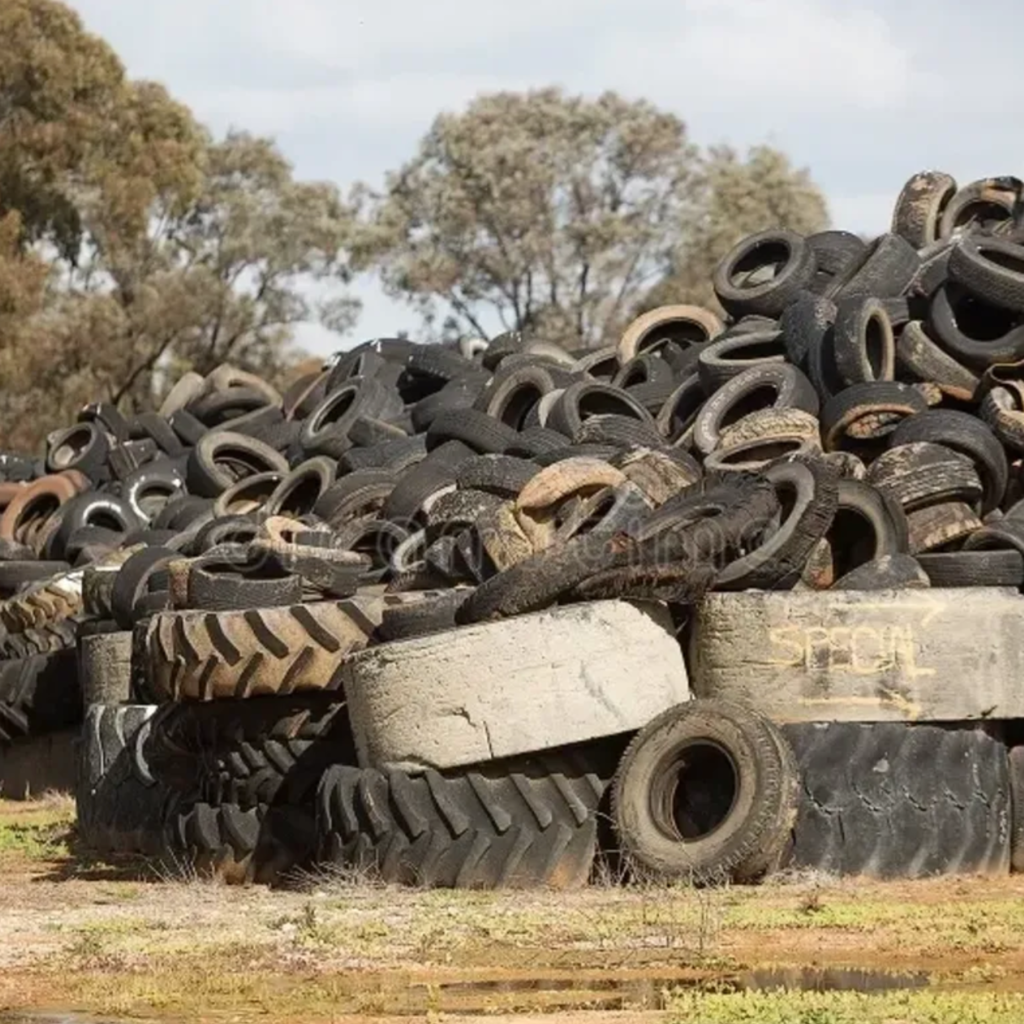
Critical mining sector produces some of the world's largest end-of-life tyres — CC has an active solution deployed.
Circular
Every CC solution aims to close the loop: waste becomes feedstock, feedstock becomes product, product displaces fossil fuels.
— The Problem We're Solving
The Industries Most Difficult to Decarbonise
Steel, cement and chemicals are essential to modern life — and all of them depend on carbon. Together they account for roughly a third of greenhouse gas emissions. Most national decarbonisation plans simply offer carbon sequestration as an offset, rather than actually fixing the problem.

ReCycle
Converting end-of-life materials — tyres, soft plastics, mixed plastics — back into usable feedstocks and products, removing them permanently from landfill and waste streams.

ReCarbon
Transforming carbon-containing waste into bioenergy, displacing fossil fuels in energy-intensive industrial processes and creating a genuine green alternative.

Circular Economy
Minimising what goes to landfill, maximising reuse — building economic value from materials once considered useless liabilities in the Australian industrial landscape.
— Active Solutions
What We're Doing Right Now
01
End-of-Life Tyres
Australia’s critical mining sector generates some of the world’s largest end-of-life tyres. Tyres decompose slowly and emit methane — a powerful greenhouse gas — plus chemicals toxic to air, soil and water. CC has an active solution deployed: a 6-tonne per day tyre recycling plant using proven pyrolysis technology that processes all types of tyres including the largest OTR whole.
02
Plastics & Soft Plastics
Most soft plastics and mixed plastics have no viable recycling path. CC converts them through pyrolysis into Plastics Pyrolysis Oil (PPO) and other outputs. Our operational plastics plant processes 1.6 tonnes per hour, with modular solutions down to 200kg/hr for smaller or regional applications.
03
Green Steel & Cement
Through bioenergy derived from waste carbon feedstocks, CC is developing green alternatives for steel, cement and chemical production — some of the hardest industries to shift from fossil fuels. Active development with commercial pathways now emerging.
04
Energy & Carbon Products
Beyond fuel substitution, CC’s pyrolysis process generates recovered carbonaceous solid and other recoverable materials with target offtake pathways— creating product value from every tonne processed and improving the economics of the circular loop.
— How It Works
The CC Circular Process

Feedstock Collection
End-of-life tyres, soft plastics and mixed plastics are collected from mining sites, municipal streams and industrial operators.

Pyrolysis Processing
Materials are thermally processed through Technotherm's modular pyrolysis systems in a controlled, zero-combustion environment.

Product Separation
The process yields pyrolysis oil (both TPO and PPO depending on feedstock), recovered carbonaceous solid, gas and steel — each with distinct commercial offtake markets.

Offtake & Value Creation
Products are sold into identified commercial markets — displacing fossil fuels, replacing virgin materials, and closing the loop on waste.
— Sectors We Serve
Industries Our Technology is Active In

Mining
Australia's mines generate massive OTR (off-the-road) tyre waste. CC converts these into fuel and recovered carbonaceous solid on-site or regionally.

Construction & Steel
Green steel pathways using bio-derived carbon feedstocks to displace coking coal in blast furnaces — a first-of-kind transition.

Chemicals & Cement
Applying lessons from green steel to decarbonise cement production and chemical feedstock supply chains across Australia.

Retail & Municipal
Soft plastics from supermarket take-back schemes and council collections processed into PPO — preventing landfill at scale.

Forestry & Agriculture
Agricultural and forestry biomass waste converted to bioenergy, supporting rural operations to reduce fossil fuel dependence.

Energy
Bio-derived fuel oils and gas from the pyrolysis process integrated directly into industrial energy systems as fossil fuel replacements.